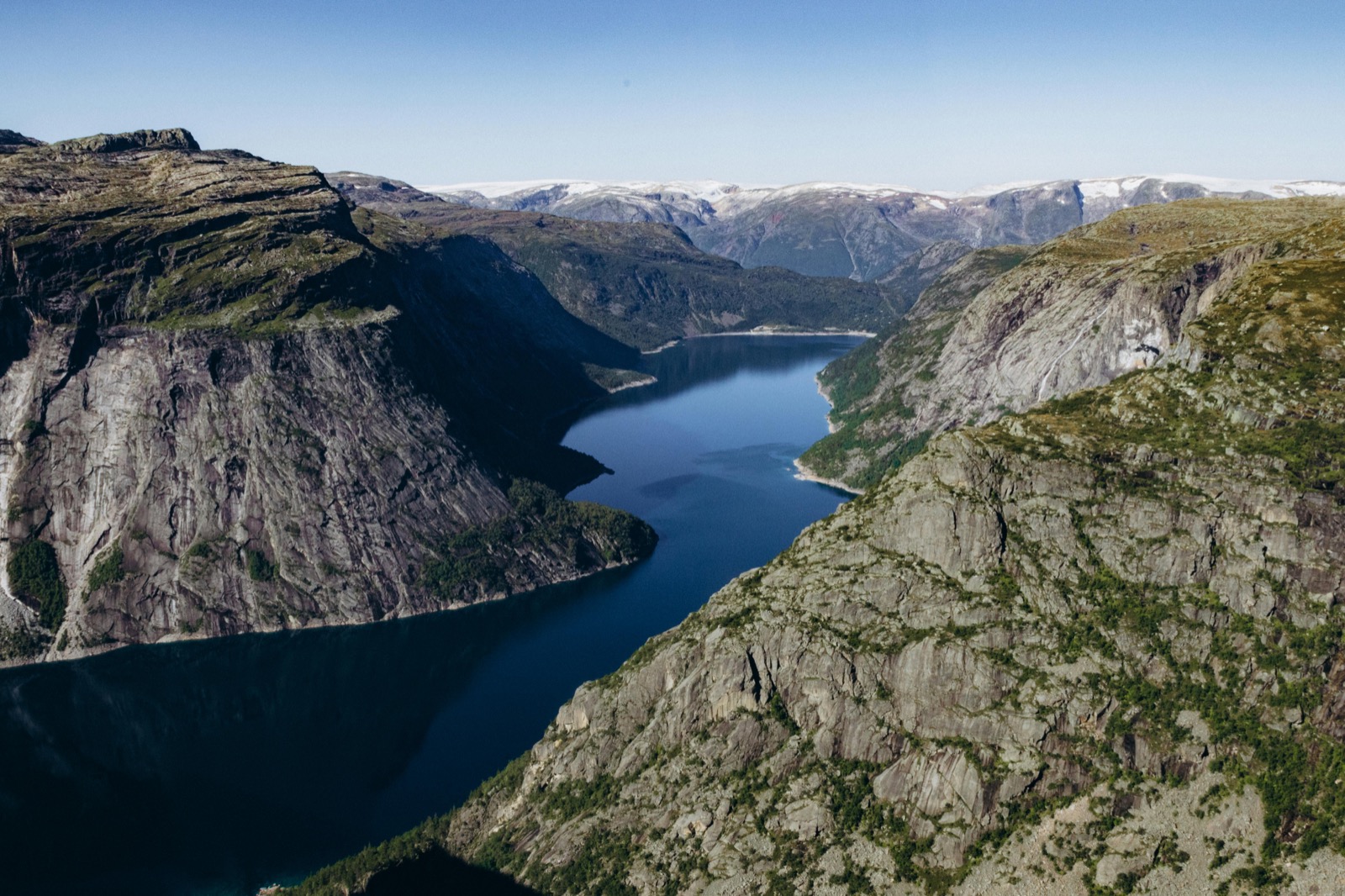
People search for "the Sognefjord" as though it were a single viewpoint you drive to, photograph and leave. It isn't. At more than 200 kilometres from the coast to its innermost arms, it is the longest and deepest fjord in Norway — a whole landscape of branching fjord arms, each with its own villages, mountains and character. Nærøyfjord, Aurlandsfjord, Fjærlandsfjord, Høyangsfjord: these are all "the Sognefjord," and they are hours apart.
That matters for two reasons. First, you cannot see all of it in a day, so you have to choose. Second — and this is the part most guides skip — the famous parts and the beautiful parts are not always the same parts. Below we have split the best places into the headline destinations everyone knows, and the quieter ones where you get the same scale of scenery without sharing it with a cruise ship.
The famous places (and their crowd reality)
These are the postcard names, and they earn their reputations. They are also where the cruise ships dock and the coaches park, particularly between June and August. Worth seeing — just go in with your eyes open about timing.
Flåm and the Flåm Railway
The undisputed headline act. The Flåm Railway climbs from the fjord to the mountains at Myrdal through one of the most dramatic stretches of track anywhere, and the village sits at the head of the Aurlandsfjord. It is genuinely spectacular — and it is also the single busiest point on the whole Sognefjord, with large cruise ships unloading thousands of day visitors in peak season. See it, but consider an early or late visit, and don't make it your base.
The Nærøyfjord
A narrow, sheer-walled arm of the Sognefjord and a UNESCO World Heritage Site — for many people the definitive Norwegian fjord image. The boat trip between Flåm and Gudvangen through the Nærøyfjord is rightly famous. Expect to share it: this is the most heavily marketed fjord experience in the country.
Balestrand
An elegant fjordside village with a long history as an artists' retreat, good accommodation, and an easy position on the main fjord. Busier than the inner-fjord towns but far calmer than Flåm — a sensible, scenic base if you want comfort and central access.
Aurland, Lærdal and Fjærland
- Aurland — home to the Stegastein viewing platform, which juts out over the Aurlandsfjord; a short, popular detour with a remarkable view
- Lærdal — a well-preserved old village with characterful timber houses, near the long Lærdal tunnel and the scenic "Snow Road" mountain route
- Fjærland — a glacier village at the end of the Fjærlandsfjord, with arms of the Jostedalsbreen glacier nearby and a well-known second-hand "book town"
Where to skip the crowds
This is the part worth slowing down for. The inner and southern arms of the Sognefjord — away from the Flåm–Nærøyfjord corridor — see a tiny fraction of the visitors, not because they are any less beautiful but because they sit off the cruise and railway circuit. If your idea of a fjord is mountains rising straight out of still water and a trail to yourself, this is where to go.
Høyanger
Our home base, on the Høyangsfjord — a southern arm of the Sognefjord. Mountains rise sharply from the waterfront to over 1,300 m, waterfalls run through the town centre, and the hiking routes above town deliver the broad fjord panoramas people travel to Norway for, almost always without another group in sight. It is an honest, working town rather than a polished tourist village, and that is part of the appeal. We have written more on what to do in Høyanger and how to get there if it sounds like your kind of place.
Vik i Sogn
Across the fjord from Balestrand, Vik is home to the Hopperstad Stave Church — one of the best-preserved medieval stave churches in Norway — and the stone Hove Church. A genuine historical detour that most fjord itineraries miss entirely, around 30 minutes from Høyanger.
The inner-fjord arms
Beyond the named towns, the smaller arms and shorelines of the inner Sognefjord reward anyone willing to drive a little further or take a slower ferry. Fewer facilities, fewer people, and the same towering walls of rock and water. This is the fjord as it looks when nobody is selling it to you.
Best for… — a quick way to choose
- Best for first-timers wanting the icons: Flåm and the Nærøyfjord, ideally outside peak hours
- Best for a comfortable, central base: Balestrand
- Best for hiking and big views: Høyanger, with summits straight from the waterfront
- Best for avoiding crowds entirely: the inner and southern arms — Høyanger, Vik, and the smaller shorelines
- Best for history: Vik (stave church) and Lærdal (old timber village)
- Best for glaciers: Fjærland
How to combine them
Because the fjord is so long, the trick is not to cover everything — it is to pair one famous sight with one quiet base. A common and rewarding pattern: spend a day on the Flåm–Nærøyfjord highlights, then move to a calmer part of the fjord for hiking and slower days, returning home with both the icon and the experience of having the fjord more or less to yourself. If you are weighing it up, our piece on the Sognefjord without the crowds makes the fuller case for building a trip around the quieter side.
See the Sognefjord from above — without the crowds
We guide private hiking tours above Høyanger, on a quiet southern arm of the Sognefjord. Five routes from gentle waterfall paths to high alpine summits, each one delivering the fjord panorama you came to Norway for — just for your group, at your pace.
See all hiking toursFrequently asked questions
What are the best places to visit in the Sognefjord?
The most popular places are Flåm and the adjoining Nærøyfjord, a UNESCO World Heritage arm of the fjord, along with Balestrand, Lærdal, Aurland and the glacier village of Fjærland. Quieter alternatives with the same scale of scenery include Høyanger, Vik i Sogn and the inner-fjord arms, where you can see the fjord and mountains without the cruise and coach traffic of the headline destinations.
Is the Sognefjord one place or a region?
The Sognefjord is a region, not a single destination. At more than 200 km it is the longest and deepest fjord in Norway, branching into many named arms — Nærøyfjord, Aurlandsfjord, Fjærlandsfjord, Høyangsfjord and others — each with its own towns and character. "Visiting the Sognefjord" really means choosing which part of it to visit.
Which part of the Sognefjord is least crowded?
The inner and southern arms away from the Flåm–Nærøyfjord corridor see far fewer visitors. Towns such as Høyanger, on the Høyangsfjord, offer high mountain hiking straight from the waterfront and broad fjord views with a fraction of the foot traffic, because they sit off the main cruise and railway circuit.
Is Flåm worth visiting or is it too touristy?
Flåm is genuinely spectacular and the Flåm Railway is one of the world's great scenic train journeys, so it is worth seeing. It is also the busiest point on the Sognefjord, receiving large cruise ships and coach groups in summer. A good approach is to experience Flåm early or late in the day, then base yourself somewhere quieter on the fjord for the rest of your trip.
How many days do you need to see the Sognefjord?
You can see one highlight — such as Flåm and the Nærøyfjord — in a single day, but two to four days lets you combine a famous sight with a quieter base and some hiking. Because the fjord is so long, distances between destinations are significant, so it is better to choose two or three areas than to try to cover everything.